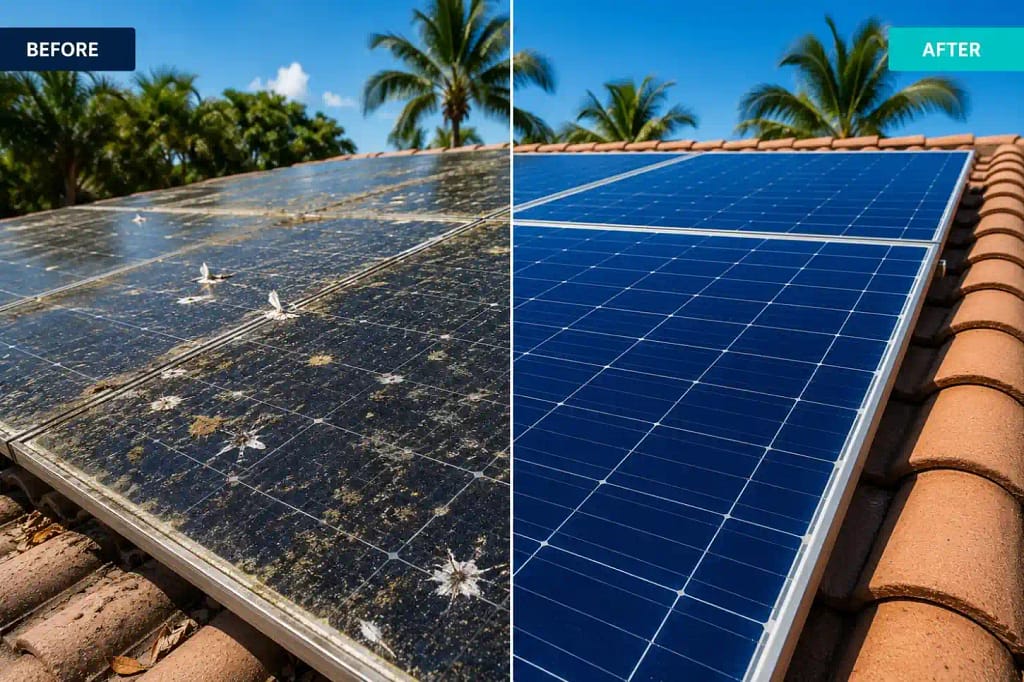
Most solar panel damage in Miami does not come from storms or manufacturing defects. It comes from how homeowners clean them. The wrong tool, the wrong chemical, the wrong time of day, or the wrong pressure setting can permanently reduce energy output, damage the anti-reflective coating and void the manufacturer’s warranty on a system that cost tens of thousands of dollars to install.
The most common solar panel cleaning mistakes in Miami include using pressure washers, abrasive brushes, harsh chemical cleaners and cleaning during peak midday heat when thermal shock can crack the glass. In Miami, salt air and year-round humidity accelerate contamination on panel surfaces. Most manufacturers require soft-bristle tools, deionized water and low-pressure rinsing. Professional cleaning in Florida costs between 150 and 350 dollars and includes the documented service records needed to protect the warranty.
Why Cleaning Solar Panels in Miami Is Different From Other Markets
Miami’s environment creates specific cleaning challenges that homeowners in drier or cooler markets do not face.
Salt air from coastal neighborhoods including Miami Beach, Key Biscayne, Brickell and Coconut Grove deposits a corrosive film on panel surfaces continuously. South Florida’s high humidity accelerates mold, algae and biological growth on panel frames and glass edges. Hurricane season from June through November leaves behind storm debris, pollen and roof granule contamination that sits on panel surfaces and bakes into the glass under Miami’s intense UV heat.
Clean panels in South Florida produce up to 25 percent more electricity than dirty ones. The incentive to clean is real. But cleaning incorrectly in this climate creates damage that is often invisible at first and permanent once it sets in.
The Most Damaging Mistakes Miami Homeowners Make
Mistake 1: Using a Pressure Washer
This is the most common and most damaging mistake.
Standard residential pressure washers run at 2,000 PSI or more. That force cracks tempered glass, breaks frame seals, loosens junction box covers and forces water into electrical connections. Micro-fractures from pressure washing are not always immediately visible, but they reduce panel efficiency and give manufacturers grounds to deny warranty claims.
Mistake 2: Using Abrasive Brushes or Scouring Pads
The anti-reflective coating on solar panel glass is what maximizes light absorption and energy output.
Abrasive brushes, steel wool, rough cloths and scouring pads scratch that coating permanently. Once scratched, it cannot be restored. The efficiency loss is permanent and scratching is one of the most commonly cited reasons manufacturers deny warranty claims during inspection.
Mistake 3: Cleaning With Harsh Chemicals
Chemical cleaners containing ammonia, alcohol or acids corrode panel frames, degrade protective coatings and compromise the seals around electrical connections.
In Miami’s coastal climate, panels already face accelerated corrosion from salt air. Applying non-approved chemical cleaners accelerates that process and creates damage that insurers and manufacturers distinguish from weather-related wear. Using only manufacturer-approved cleaning solutions is not a suggestion. For most panel brands it is a warranty requirement.
Mistake 4: Cleaning Panels in Direct Midday Sun
Panels in Miami reach surface temperatures of 140 degrees Fahrenheit or higher during peak afternoon sun.
Applying cold water to a panel at that temperature causes thermal shock. Temperature differentials between the cold water and the hot glass create stress that leads to micro-cracks in the glass and cell layers beneath. Cleaning should be done in the early morning before panels heat up or in the evening after they cool. This is a standard manufacturer recommendation across most panel brands.
Mistake 5: Assuming Rain Keeps Panels Clean
Many Miami homeowners assume that South Florida’s heavy rainy season handles panel cleaning.
Rain removes loose surface dust but does not remove bird droppings, salt residue, pollen buildup, hardened debris or biological growth. These contaminants bond to the panel surface over time and require manual cleaning to remove properly. Panels that are only rain-rinsed in Miami’s coastal environment accumulate a film of salt residue and organic material between cleanings that consistently reduces energy output.
Mistake 6: Walking on or Leaning Against Panels
Body weight concentrated on a small surface area causes micro-cracks in the photovoltaic cells beneath the glass.
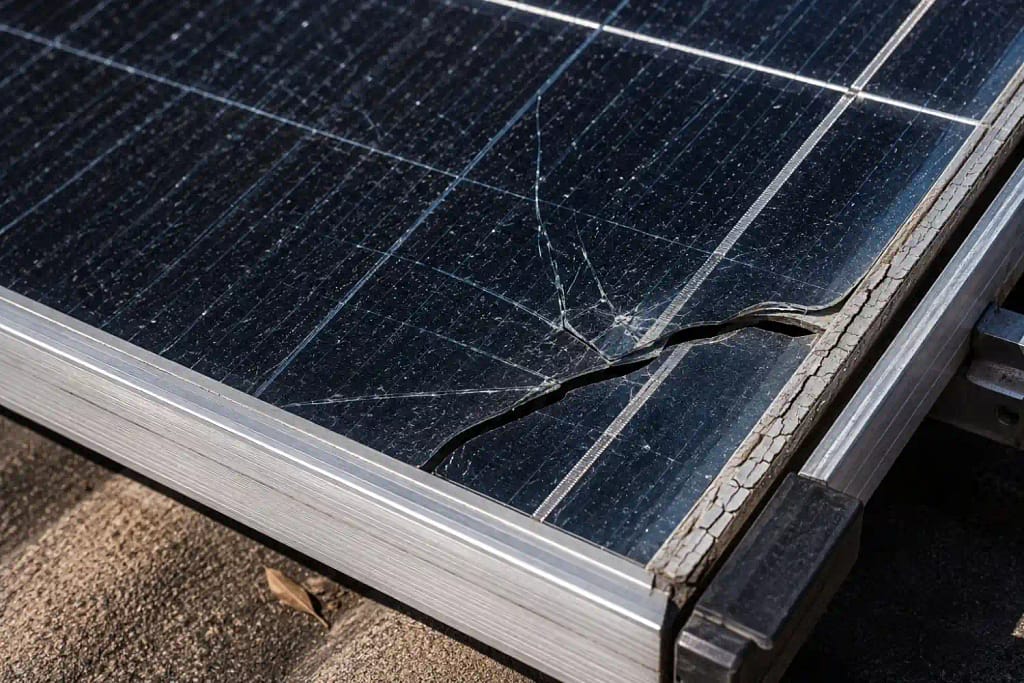
These cracks do not always appear immediately in performance monitoring but worsen progressively. They are also distinguishable from manufacturing defects during warranty inspection, meaning claims for any issue on a system with walk-on damage can be denied. Roof access for panel cleaning requires proper safety equipment and technique, not simply stepping across the array.
Mistake 7: Skipping Documentation
Many panel manufacturers require documented routine cleaning and maintenance to keep warranties valid.
Homeowners who clean their own panels without records, or who hire unlicensed individuals with no documentation trail, create a gap in their maintenance history that can result in warranty claim denials for unrelated issues. A professional cleaning service provides dated records of each service, the method used and the products applied. That documentation is what protects the warranty when a claim is needed.
What the Correct Cleaning Method Looks Like
Tools That Are Safe
- Deionized or distilled water to prevent mineral spotting
- A soft-bristle brush designed specifically for solar panel surfaces
- A microfiber cloth for spot cleaning
- A gentle low-pressure rinse at garden hose flow rate
Tools That Are Not Safe
- Standard pressure washers at any PSI setting above 500
- Steel wool, scouring pads or hard-bristle brushes
- Household glass cleaners, ammonia-based sprays or acid cleaners
- Any tool that requires direct contact with significant applied force
Timing
Clean in the early morning or after sunset when panels are cool.
Avoid cleaning during or immediately after peak afternoon sun. In Miami’s summer months this means scheduling cleaning before 8 AM or after 6 PM.
When DIY Cleaning Becomes a Liability in Miami
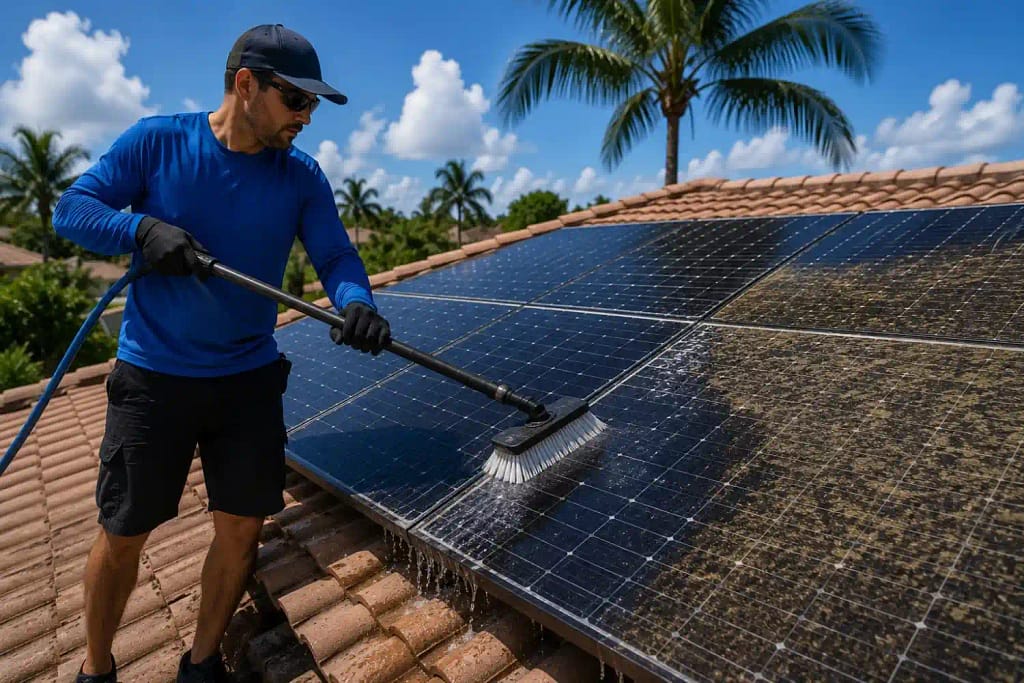
Roof access in Miami carries real risk.
Pitched roofs in South Florida are often steep, wet from humidity and covered in algae or biological growth that makes surfaces slippery. Unlicensed contractors and homeowners attempting panel cleaning without proper safety equipment account for a significant portion of roof-related injuries in Florida. An accident during a DIY cleaning also creates insurance complications for homeowners, since unlicensed individuals working on a property are not covered by the homeowner’s policy in most cases.
Professional solar panel cleaning in Florida typically costs between 150 and 350 dollars per service depending on system size and roof accessibility. That cost is small compared to voiding a 25-year warranty, replacing damaged panels or facing a roof injury with no coverage.
LZ Pressure Cleaning provides professional solar panel cleaning in Miami using low-pressure, manufacturer-safe methods, soft-bristle equipment and documented service records for residential and commercial solar installations across Miami-Dade County.
How Often Solar Panels in Miami Need Professional Cleaning
Most Miami homes need professional solar panel cleaning once or twice a year.
Coastal properties in Miami Beach, Key Biscayne, Brickell and Coconut Grove benefit from twice-yearly cleaning due to continuous salt air exposure. Any property should schedule a cleaning after a hurricane or tropical storm regardless of the regular schedule, since storm debris and roof granule contamination bond to panel surfaces quickly in South Florida’s post-storm heat.
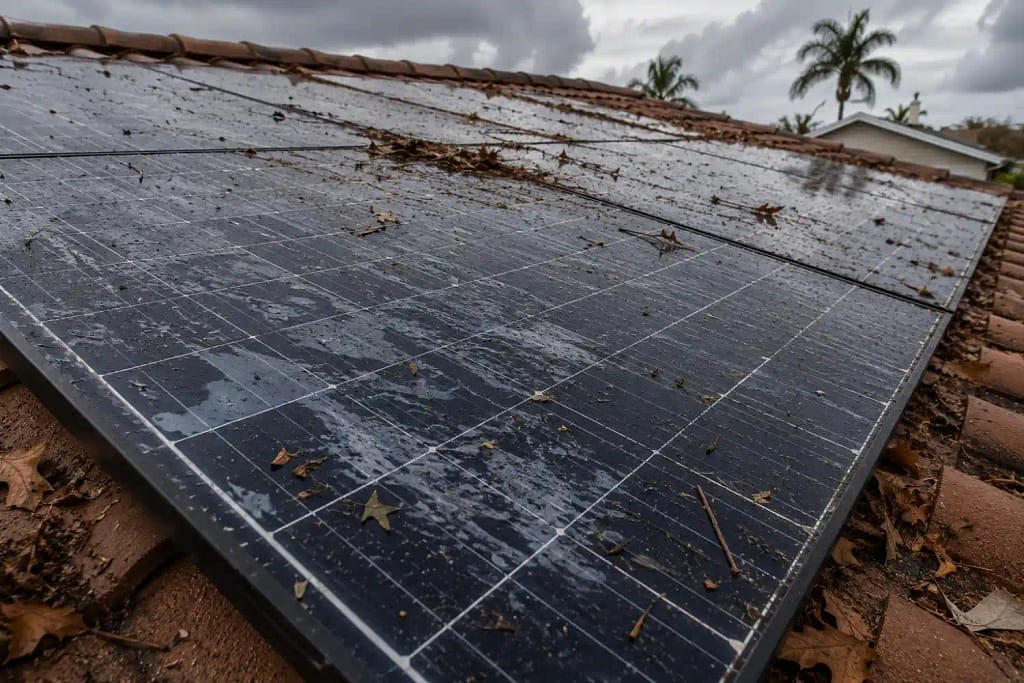
Early signs that panels need cleaning before the scheduled interval include a visible drop in energy output shown on the inverter monitoring system, visible streaking or discoloration on the glass surface, and bird droppings or debris that has not rinsed off after rainfall.
Call (877) 658-5887 or get a free solar panel cleaning estimate in Miami online.
What are the most common mistakes when cleaning solar panels in Miami?
The most common mistakes are using a pressure washer, abrasive brushes, harsh chemical cleaners and cleaning panels during peak midday heat. In Miami, salt air and high humidity create additional contamination challenges. All of these mistakes can permanently damage the anti-reflective coating, void the manufacturer’s warranty and reduce energy output.
Can you use a pressure washer to clean solar panels in Miami?
No. Pressure washers at standard residential PSI levels crack tempered glass, break frame seals and force water into electrical connections. Most solar panel manufacturers explicitly list high-pressure washing as a warranty-voiding cleaning method. Solar panels require a low-pressure rinse at garden hose flow rate with soft-bristle tools and manufacturer-approved cleaning solutions.
How often should solar panels be cleaned in Miami, FL?
Most Miami homeowners need professional solar panel cleaning once or twice a year. Coastal properties near salt air in Miami Beach, Key Biscayne and Brickell benefit from twice-yearly service. Any system should be cleaned after a hurricane or tropical storm since storm debris and roof granules bond quickly to panel surfaces in South Florida’s post-storm heat.