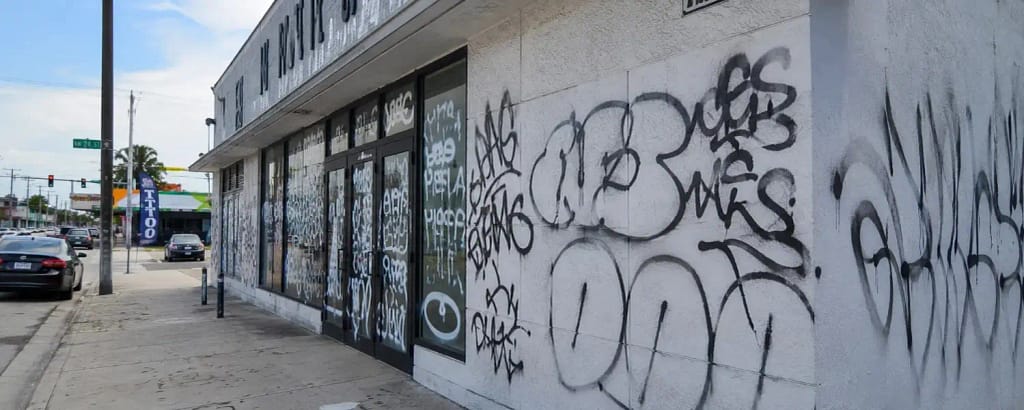
Graffiti reduces commercial property value in Miami by an estimated 15 percent according to National Association of Realtors data, rising to 25 percent for profane or hate-based content. In Miami’s commercial market, graffiti also reduces customer foot traffic, damages tenant retention and triggers further vandalism when left unaddressed. Removal within 24 to 48 hours is consistently cited as the most effective way to limit financial damage and prevent recurrence.
Graffiti on a commercial property in Miami does more than create an eyesore. It directly reduces property value, drives away customers, signals neglect to prospective tenants and investors, and in some cases triggers a cycle of further vandalism that compounds every week it goes unaddressed.
The Numbers Behind the Damage
What Graffiti Does to Property Value
The National Association of Realtors reports that properties with graffiti lose an estimated 15 percent of their value.
When graffiti is profane or hate-based, that figure rises to 25 percent.
For a commercial property in Miami valued at 1,000,000 dollars, that represents a potential loss of 150,000 to 250,000 dollars in market value from vandalism that cost a few dollars in spray paint to create.
The Multiplier Effect on Surrounding Properties
Graffiti does not only affect the property it appears on.
Studies show that property values in graffiti-affected areas decrease by 1.6 percent for every 10 percent increase in property damage reported to police. Commercial properties in those zones fall in value by 10,000 dollars for every 1,000 dollars spent annually on graffiti remediation.
In Miami’s competitive commercial real estate market, where Brickell, Downtown Miami, Doral and Coral Gables attract significant investment, visible vandalism on a single building can affect perception of the entire block.
Why Miami Commercial Properties Are Particularly Exposed
High Foot Traffic Areas Are High Graffiti Targets
Miami’s most commercially active neighborhoods, including Wynwood, Little Havana, Downtown Miami and Miami Beach, combine high pedestrian traffic with building facades that remain accessible overnight.
Retail storefronts, parking structures, loading docks and exterior walls along commercial corridors are the surfaces most frequently targeted.
The Wynwood Exception Does Not Apply to Most Commercial Properties
It is worth addressing directly: Wynwood’s commissioned street murals are not graffiti. They are contracted, curated works that drive tourism and have pushed office lease rates in Wynwood to approximately 80 dollars per square foot, 83 percent higher than the Miami-Dade County average according to Colliers data.
Unauthorized tagging, gang marking and spray paint vandalism on commercial storefronts and building exteriors produce the opposite effect.
The distinction matters because some property owners in Miami mistakenly tolerate unauthorized graffiti assuming it adds character. It does not. Commissioned murals increase value in designated arts districts. Unauthorized vandalism decreases it everywhere else.
How Graffiti Damages Commercial Properties Beyond the Surface
Lost Customers and Foot Traffic
Customers form impressions of a business in seconds before they enter.
Studies show that 95 percent of consumer decisions about whether to enter a business are influenced by exterior cleanliness and appearance. A graffiti-covered storefront, entrance or parking area tells a potential customer that the business does not maintain its property.
That perception costs revenue directly.
The Broken Windows Effect in Miami Commercial Zones
The broken windows theory, documented in urban research, holds that visible signs of disorder encourage further criminal activity in the same area.
In commercial property terms, graffiti that is not removed promptly signals to additional vandals that the property is unmonitored and untended. Graffiti recurrence rates exceed 50 percent in some urban areas.
Immediate removal within 24 to 48 hours is consistently cited by city anti-graffiti programs as the single most effective deterrent. Properties that allow graffiti to remain for days or weeks see it return faster and in greater volume.
Tenant Retention and Lease Negotiations
Commercial tenants in Miami office buildings, retail centers and mixed-use properties factor building appearance into lease renewal decisions.
A building with graffiti on its exterior, parking structure or entrance signals poor maintenance oversight. That perception affects tenant satisfaction, weakens the property manager’s negotiating position at renewal, and in some cases triggers early lease termination clauses tied to building condition standards.
Prospective tenants comparing two similar properties in the same Miami submarket will consistently favor the one without evidence of vandalism and delayed maintenance response.
Insurance and Liability Exposure
Graffiti that includes hate speech, gang markings or threatening content creates documented liability exposure for commercial property owners.
If a tenant, employee or visitor is targeted or harassed in connection with gang-related graffiti on a building where the marking was allowed to remain, the property owner faces premises liability questions. Documenting swift removal is part of demonstrating that reasonable care was taken.
The Cost of Removal Versus the Cost of Waiting
Professional Removal Costs Are Manageable
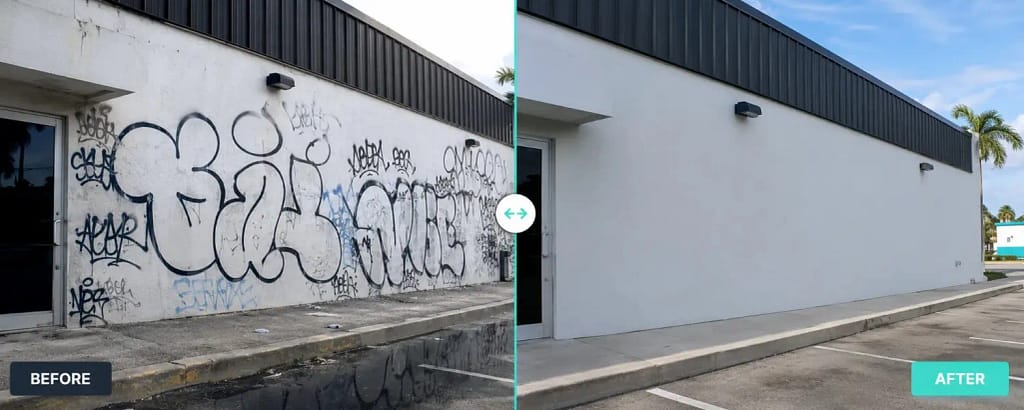
Professional graffiti removal from commercial surfaces in Miami runs between 200 and 600 dollars for a standard single-surface job depending on the surface type, paint used and size of the affected area.
Porous surfaces like concrete block and stucco cost more to clean than sealed or painted surfaces. Some surface types require chemical treatment, light sanding or repainting of the affected area to fully restore the original finish.
The Cost of Waiting Is Not
Every day graffiti remains on a commercial property in Miami compounds the financial damage.
Surface bonding increases as paint cures in South Florida’s heat, making removal progressively more difficult and expensive. The perception damage to tenants, customers and passersby accumulates daily. The risk of additional vandalism targeting the same property increases.
The math favors fast removal every time.
LZ Pressure Cleaning provides professional graffiti removal services in Miami for commercial buildings, storefronts, parking structures, exterior walls and fences across Miami-Dade County, using surface-appropriate techniques that restore the original finish without damaging the underlying material.
What Surfaces Graffiti Most Commonly Affects on Miami Commercial Properties
Storefronts and Building Facades
Street-level commercial facades are the most frequently targeted surfaces in Miami’s high-traffic commercial corridors.
Stucco, painted concrete, brick and EIFS exterior systems all require different removal approaches. Using the wrong chemical or pressure on a stucco facade causes surface damage that creates a secondary repair cost on top of the removal work.
Parking Structures and Garage Walls
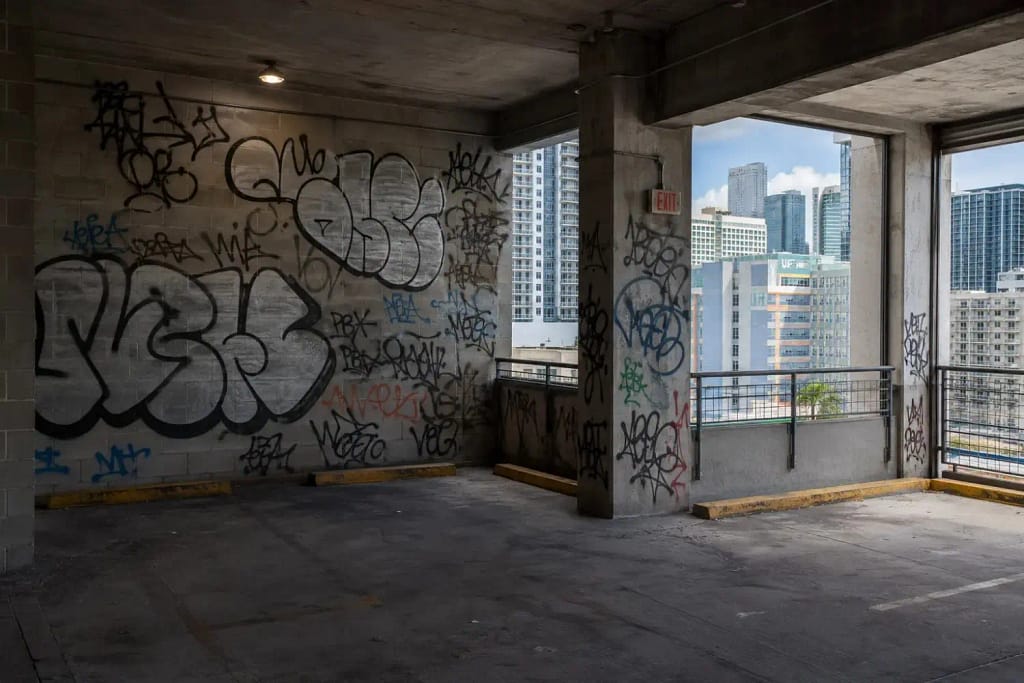
Multi-level parking structures in Downtown Miami, Brickell and Aventura provide large, low-visibility surfaces that are targeted consistently.
Concrete block and painted garage walls respond well to professional chemical treatment and pressure cleaning when removal is done promptly. Graffiti that has been allowed to cure for weeks in Miami’s heat requires significantly more aggressive treatment.
Perimeter Walls and Fences
Commercial perimeter walls, fencing and gate surfaces are exterior-facing and visible from the street.
These surfaces are often the first thing a visitor, customer or investor sees when approaching a commercial property. Graffiti on a perimeter wall creates the same first-impression damage as graffiti on the building facade itself.
LZ Pressure Cleaning provides commercial building cleaning and graffiti removal in Miami across all surface types including stucco, concrete, painted brick, EIFS, fencing and parking structure walls.
How Fast You Respond Determines How Much It Costs
Remove Within 24 to 48 Hours
Every anti-graffiti program and commercial property management authority consistently recommends the same timeline: remove graffiti within 24 to 48 hours of discovery.
Fast removal limits surface bonding, eliminates the signal that the property is unmonitored, reduces the likelihood of repeat vandalism to that location, and limits the number of days the property’s appearance and perceived value are affected.
Document Everything
Photograph graffiti before removal and after.
Keep records of removal dates, contractor invoices and any police report filed. This documentation supports insurance claims, demonstrates duty of care for liability purposes, and provides a maintenance history that is useful in tenant and investor conversations.
Contact a Licensed Professional
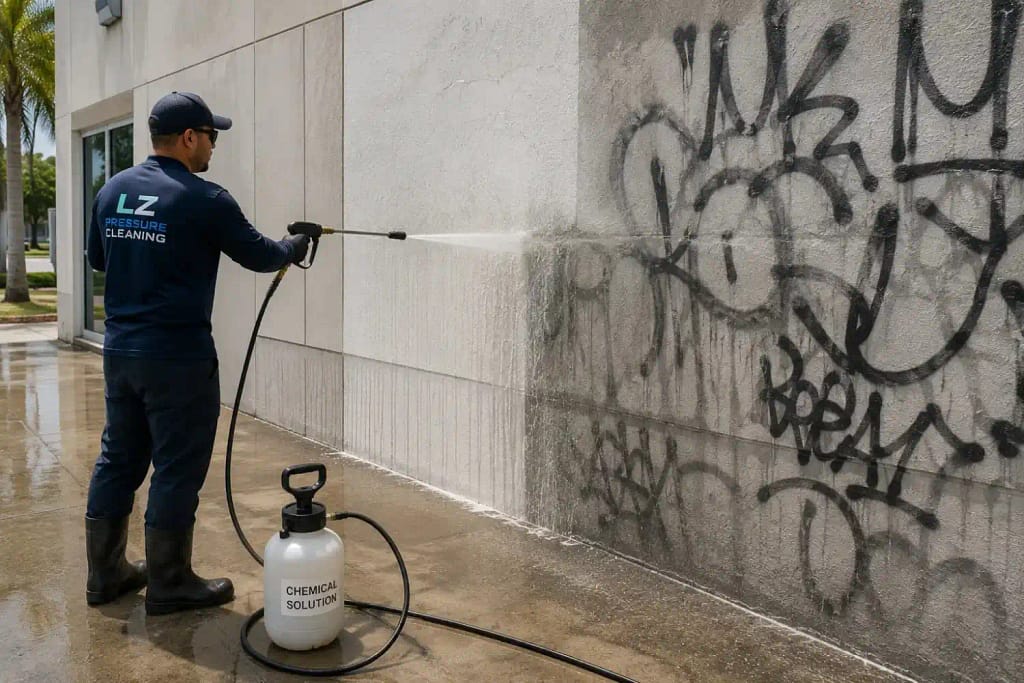
Surface type determines removal method.
What removes paint from sealed concrete without residue will damage unsealed stucco. What works on a metal fence will not work on a painted brick facade. Using the wrong product or pressure on the wrong surface creates a secondary damage problem on top of the original vandalism.
Call (877) 658-5887 or get a free graffiti removal estimate for your Miami commercial property online.
How does graffiti affect commercial property value in Miami?
The National Association of Realtors reports that properties with graffiti lose an estimated 15 percent of their value, rising to 25 percent when graffiti is profane or hate-based. In Miami’s commercial real estate market, graffiti also reduces foot traffic, damages tenant retention and creates a compounding effect where unaddressed vandalism attracts further vandalism.
How quickly should graffiti be removed from a commercial building in Miami?
Graffiti should be removed within 24 to 48 hours of discovery. Fast removal limits surface bonding in South Florida’s heat, eliminates the signal that the property is unmonitored, and significantly reduces the likelihood of repeat vandalism targeting the same location. Delayed removal increases both the removal cost and the duration of property value damage.
Is the graffiti in Wynwood the same as vandalism on other Miami commercial properties?
No. Wynwood’s street art consists of commissioned, contracted murals that have driven office lease rates to approximately 80 dollars per square foot, 83 percent above the Miami-Dade County average. Unauthorized tagging and spray paint vandalism on commercial storefronts and building facades produces the opposite effect, reducing property values and deterring customers.