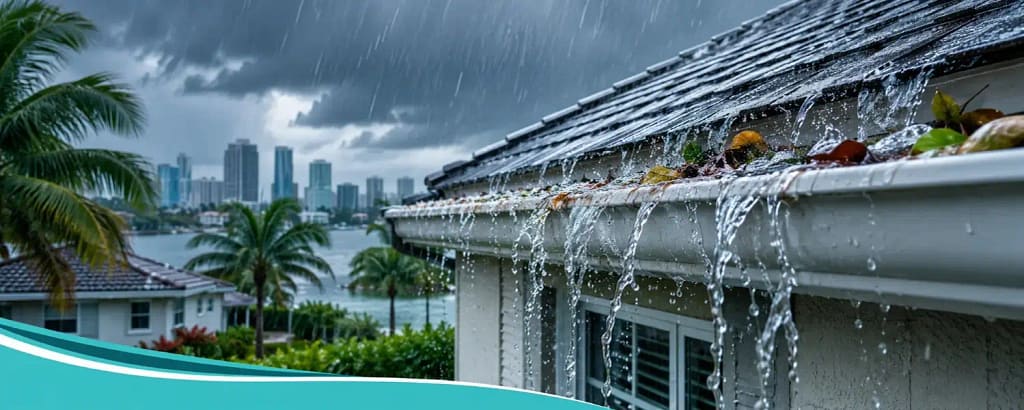
Gutters overflow during Miami rainstorms due to debris clogs from year-round palm fronds, improper sloping, or sagging brackets. Often, standard five-inch gutters are simply undersized for South Florida’s intense tropical downpours. Regular cleaning two to four times a year, correcting the pitch, or upgrading to larger six-inch seamless gutters prevents this overflow.
Why This Is Not a Minor Problem in Miami
Miami gets some of the heaviest rainfall in the country, especially during hurricane season from June through November. When your gutters cannot move that volume of water away from your home fast enough, the overflow does not just spill onto the lawn harmlessly. It runs backward down the fascia board, pools against the concrete slab, and creates the exact high-moisture conditions that mold and wood rot need to thrive.
Left unaddressed, overflowing gutters lead to four specific problems on South Florida homes:
- Foundation Damage: Water pooling repeatedly at the base of the house compromises the soil beneath your slab.
- Fascia and Soffit Rot: Water running backward down the roofline rots wood framing instead of traveling safely through the downspout.
- Landscape Erosion: Concentrated sheets of water tear up expensive tropical landscaping, soil, and mulch below the overflow points.
- Stucco & Exterior Mold: Constant moisture creates dark, unsightly mold streaks on exterior walls and inside soffit areas.
None of this happens from a single storm. It is the cumulative result of repeated overflow during a Miami wet season, which hammers your home for five to six months out of the year.
The Most Common Causes of Gutter Overflow
When gutters fail to channel water away from a home, it is rarely due to a single structural failure. Instead, it is usually the result of environmental blockages or physical shifts in the system itself. In areas like South Florida, which experience heavy sub-tropical downpours, even minor imperfections in your gutter setup can rapidly trigger a massive spillover. Understanding exactly what disrupts the system is the first step toward preventing water damage to your roofline and foundation.
The four main culprits behind overflowing channels include:
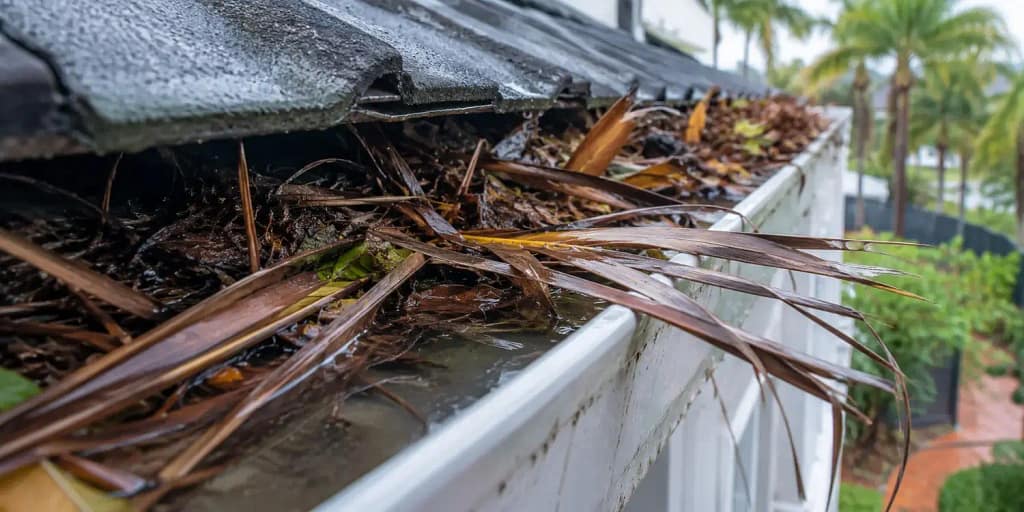
- Debris Blockages: Year-round shedding from trees such as oak leaves, pine needles, and palm fronds, combines with rough roof granules to create dense dams inside the gutter channel. When this material migrates to the downspouts, it forms a tight plug that causes water to back up and pour over the front edges.
- Incorrect Slope or Pitch: Gutters are not meant to run completely flat; they require a precise downward slope toward the nearest downspout to keep water moving. If the initial installation was off, or if the house has settled unevenly over time, water pools in stagnant sections and spills over at the lowest point of resistance during heavy rain.
- Inadequate Water Capacity: Many homes rely on standard 5-inch gutter channels that are built for average regional weather. When hit with intense tropical storm systems or sudden summer deluges, these standard systems simply lack the physical volume to catch and discharge the immense sheets of water flowing off the roof.
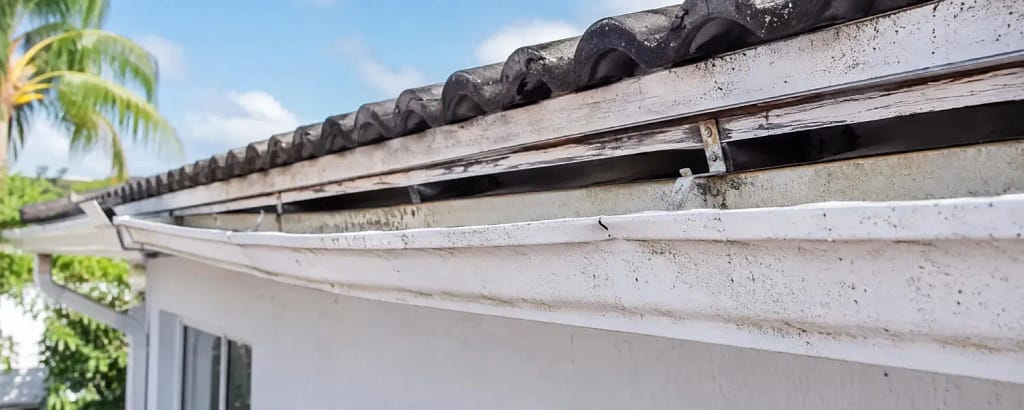
- Sagging and Loosened Hardware: Heavy snow, severe wind, or the sheer weight of standing water can warp gutter sections or pull hangers loose from the fascia board. This creates physical dips and gaps where water escapes the system entirely before it ever reaches an exit.
How to Spot the Aftermath (Without Standing in the Rain)
Most homeowners do not see their gutters overflow in real-time because they are safely indoors. However, you can easily spot the physical evidence left behind:
- Water stains or dark vertical streaks running down your siding or stucco directly below the gutters.
- Deep trenches, displaced soil, or washed-out mulch directly beneath the roofline.
- Visible water marks or rotting paint on the wooden fascia boards.
- Puddles or mud pooling near the foundation hours after the storm has passed.
The Solution: A Step-by-Step Prevention Strategy
To fix overflowing gutters permanently in South Florida, you have to treat both the maintenance side and the structural side of the problem.
- Clear out the debris: (Perform 2-4x per year.)
Thoroughly clean out all palm fronds, leaves, and roof granules. Flushing the system with water is necessary to ensure downspouts are entirely clear through to the ground level.
- 2. Inspect and correct the pitch: (Structural tune-up.)
Check that the gutters slope downward toward the downspouts at a rate of roughly 1/4 inch for every 10 feet of gutter run. Re-secure any loose brackets or sagging hangers to eliminate low spots.
- 3. Upgrade to 6-inch seamless gutters: (The permanent Miami fix.)
If your gutters are completely clean but still overflow during heavy downpours, upgrade from standard 5-inch gutters to 6-inch seamless gutters paired with 3×4-inch oversized downspouts. This increases your system’s water capacity by nearly 50%, allowing it to handle intense tropical storm runoff effortlessly.
Pair with Roof Maintenance
Because algae, moss, and roof debris wash down into your collection system during a storm, keeping your roof clean directly extends the life of your gutters. Utilizing a seasonal roof soft washing service clears away these organic materials before they can wash down and choke your gutter channels.
When to Call a Professional

If your gutters are overflowing despite being completely free of debris, the problem requires a structural solution rather than another cleaning session. Correcting a shifted pitch, reinforcing structural sags, or retrofitting a home with higher-capacity 6-inch seamless gutters requires specialized tools and safety equipment.
Climbing ladders during Miami’s humid rainy season carries distinct physical risks, particularly on wet roofs or in volatile weather conditions. A professional inspection ensures you target the exact mechanical issue rather than paying for repetitive cleanings that won’t solve an underlying size problem.
LZ Pressure Cleaning serves homeowners across Miami-Dade County, including Miami, Coral Gables, Miami Beach, Brickell, Homestead, Aventura, Coconut Grove, Palmetto Bay, and Pinecrest.
To clear out your system before the next major storm or to restore your home’s curb appeal, get a free gutter cleaning estimate in Miami online or call (877) 658-5887.